|
|
|||
![]() |
Department of Engineering |
| University of Cambridge > Engineering Department > News & Features |
Engineering for a
|
ELCF forthcoming seminars - Lent term 2010This series aims to share ideas between engineering disciplines about potential technological responses to climate change. The series will run generally on every second Wednesday from 5.00-6.00 in Lecture Room 2, and includes speakers from the Department as well as external speakers. Previous seminar presentations can be downloaded at www.lcmp.eng.cam.ac.uk/welcome/seminars
Reducing Energy Consumption in Paper Making using Advanced Process Control and Optimisation
|
||||||||||
|
Distinguished Professor – University of Manitova
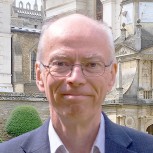
The first half would be about the inertial nature of transitions in general, in the second part I would concentrate on the two big processes that (unappreciated and forgotten) underpin our civilization: primary iron production and Haber-Bosch synthesis of ammonia that makes it possible to feed some 3 billion people.
Vaclav Smil is Distinguished Professor at the University of Manitoba and the author of many books, including Energy in Nature and Society: General Energetics of Complex Systems; Energy at the Crossroads: Global Perspectives and Uncertainties; The Earth’s Biosphere: Evolution, Dynamics, and Change; and Energies: An Illustrated Guide to the Biosphere and Civilization, all of which are published by The MIT Press. He was awarded the 2007 Olivia Schieffelin Nordberg Award for excellence in writing and editing in the population sciences.
His interdisciplinary research encompasses a broad area of environmental, energy, food, population, economic and public policy studies, ranging from quantifications and modeling of global biogeochemical cycles to long-range appraisals of energy and environmental options. He has been also applying these approaches to energy, food and environmental affairs of China.
|
Reader in Chemical Reaction Engineering – University of Cambridge
Coal is used for around 39% of global production of electricity. Despite being one of the most polluting fossil fuels, in terms of mass of CO2 emitted per unit of power generated, the use of coal is projected to increase from present day levels by ~ 80% by 2030. It is, therefore, imperative to find ways of using it for power generation whilst avoiding the release of CO2 into the atmosphere. The currently-available technology for CO2 separation is by scrubbing the flue gases with, e.g. monoethylamine (MEA): however, this technique comes with a large energy penalty because of the large heat requirement for regeneration of the solvent, reducing the efficiency of the power plant by up to one-third.
Chemical-looping combustion (CLC) has the inherent property of separating CO2 from flue gases without the energy penalty associated with amine scrubbing. Instead of air, it uses an oxygen-carrier, usually in the form of a metal oxide, to provide oxygen for combustion. This presentation will deal with the application of chemical looping to the combustion of solid fossil fuels and will highlight research being undertaken on this topic. Further work on a modification of chemical looping will be described, involving the oxides of iron in packed bed reactors, to produce hydrogen of high purity from low-grade synthesis gas. This offers substantial benefits in terms of the distributed production of hydrogen, avoiding costly transport of the gas by a dedicated grid.
John Dennis was a Lecturer in the Department of Chemical Engineering from 1984 to 1989 having previously been an undergraduate and PhD student there. During this period he published on the control of sulphur emissions from fluidised bed combustors and on the problems of gas combustion in fluidised beds. He left Cambridge to become an engineering consultant in 1989 specialising in the solution of difficult process or economic problems, with areas of technical interest including heat and mass transfer in reactors, combustion, and fluidised bed reactions. He has had close involvement with collaborative research involving academia and industry. He returned to the University and was a University Lecturer from 1st October, 2002, Senior Lecturer from 1st October, 2004 and Reader in Chemical Reaction Engineering from 1st October, 2008. Recent areas of research include the fluidised bed gasification of biomass, fundamental studies of fluidised bed hydrodynamics using MRI, discrete element modelling of fluidised beds, clean coal technology using chemical looping and other techniques, and, as a separate area, the use of microalgae for biofuels.
|
|
|
University Lecturer – University of Cambridge
Ruchi ChoudharyUniversity Lecturer – University of Cambridge
Ying JinUniversity Lecturer – University of Cambridge
Cities are the largest energy consumer by far. In the UK, around 2/3 of energy demand stems from running buildings and ground transport, mostly in urban areas. In the wider world, rapid urbanisation and ever rising standard of urban living seem insatiable in their demand for energy. The Energy Efficient Cities Initiative is a new inter-disciplinary research project at Cambridge. It explores the deployment of a wide range of technologies from now to 2050, and assesses their effectiveness in reducing energy use and environmental impacts against the context of global trends, policy and planning. The system-level analysis enables a robust scaling-up of the impact of technological innovations to the city, and accounts for rebound effects and trade-offs over time. In this lecture, a progress report will be given on the construction of a new generation of integrated simulation models and their use in assessing technology and policy options.
Ruchi Choudhary specializes in building simulation with a particular interest in multicriteria modelling of energy demand and environmental characteristics of the built environment. Her research is on simulation-based optimization methodologies for energy management and performance assessment of buildings. Steven Barrett’s main research interests are in quantifying and mitigating the environmental impacts of the transport sector. Steven focuses on system-level assessments of technological and regulatory environmental mitigation strategies related to air quality, climate change and energy efficiency. Ying Jin has been building computer simulation models of cities, and using them as experimental platforms to appraise medium to long term policy and technology scenarios.
| | Search | CUED | Cambridge University | |
|
© Department of Engineering at the University of Cambridge Information provided by web-editor |