The key to making longer-lasting electric vehicle batteries may not be specialised materials or new chemistry, but simple physical pressure, according to new research.
FUTUREROADS fellows, industry partners, researchers, and collaborators gathered in Cambridge for a week of discussion, knowledge exchange, and innovation.
A recently published interdisciplinary roadmap for neurotechnology asks: what is preventing today's lab demos from becoming tomorrow's routine clinical and real-world neurotechnologies?
Introducing Phaseshift – a Cambridge spin-out leveraging pioneering research in optic materials and their assembly. The company is developing flat optical devices known as metasurfaces.
Cambridge research into practical approaches for designing better built environments that respond to people’s diverse needs – also known as inclusive neurodesign – wins Best Paper Award.
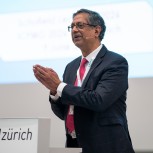
Gopal Madabhushi, Professor of Civil Engineering, delivered the Schofield Lecture at the International Conference on Physical Modelling in Geotechnics.
His Majesty The King officially opened the New Whittle Laboratory on Monday 20 July – a £58m facility designed to be the world’s leading research centre for jet engines and power generation.