Apurva Chitnis and Jad Esber first crossed paths through Headstart, a residential summer school programme, before going on to read Engineering at Emmanuel and Magdalene colleges.
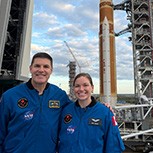
Alumna and astronaut Dr Jenni Gibbons is supporting the historic Artemis II mission – by acting as the critical voice link between the astronauts in space and the teams on the ground.
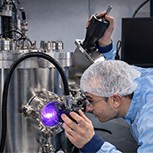
Virtual dissections of ancient Egyptian artefacts have revealed for the first time how they were made, and some surprises too, with help from a Cambridge engineer using micro-CT.
Researchers have developed a new kind of nanoelectronic device that could dramatically cut the energy consumed by artificial intelligence (AI) hardware by mimicking the human brain.
Robots are becoming increasingly capable in vision and movement, yet touch remains one of their major weaknesses – but a new miniature tactile sensor could change that.
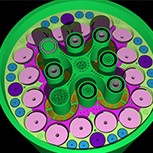
The University of Cambridge will help train industry-ready nuclear scientists as part of two UK Research and Innovation (UKRI) Doctoral Focal Awards in Nuclear Skills.
A pioneer of Human-Computer Interaction, whose research is creating more accessible and satisfying technology for us all, has won an international award for his impact.
Artificial intelligence could help doctors detect serious heart valve disease years earlier, potentially saving thousands of lives, a new study suggests.
A new initiative will harness the latest advances in artificial intelligence for weather prediction, with a goal of improving climate resilience and food security in West Africa.