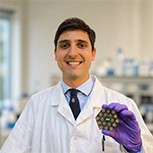
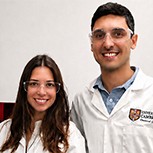
Alumnus Dr Ruben Ruiz-Mateos Serrano has won the 2026 King’s College Entrepreneurship Prize with Polytecks, a start-up with origins in the Department of Engineering.
Researchers are exploring how soil behaves as an intelligent system. Their studies aim to inspire new tech in bio-inspired computing, precision agriculture and environmental sensing.
PhD student Chris Toavs has turned her own personal experience living with type 1 diabetes into motivation for advocating for others and tackling single-use plastic waste in diabetes care.
A UK-based consortium will conduct the world’s first airspace trial aimed at reducing condensation trails, known as contrails, that could greatly reduce aviation’s global warming impact.
The key to making longer-lasting electric vehicle batteries may not be specialised materials or new chemistry, but simple physical pressure, according to new research.
FUTUREROADS fellows, industry partners, researchers, and collaborators gathered in Cambridge for a week of discussion, knowledge exchange, and innovation.
A recently published interdisciplinary roadmap for neurotechnology asks: what is preventing today's lab demos from becoming tomorrow's routine clinical and real-world neurotechnologies?
Introducing Phaseshift – a Cambridge spin-out leveraging pioneering research in optic materials and their assembly. The company is developing flat optical devices known as metasurfaces.