Search Contact information
University of Cambridge Home Department of Engineering
University of Cambridge > Engineering Department > News & Features

Professor Bolton gives 52nd Rankine Lecture

9 May 2012

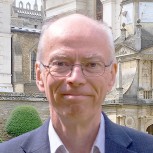
Image: Professor Malcolm Bolton

Share this article on your social network or email to a friend.

Sign up to our weekly e-bulletin

This work is licensed under a Creative Commons Licence. If you use this
content on your site, please link back to this page.

Professor Malcolm Bolton, Head of the Geotechnical and Environmental Group in the Department of Engineering, delivered the 52nd Rankine Lecture at Imperial College on "Performance-based design in geotechnical engineering"


"Professor Bolton is a distinguished engineer who has had a major influence on research in so many areas of geotechnical engineering. "

—Professor Robert Mair


The lecture was introduced by Professor Bolton's Department colleague Professor Robert Mair who described him as "a distinguished engineer who has had a major influence on research in so many areas of geotechnical engineering." Professor Bolton, who is Professor of Soil Mechanics and Director of the Schofield Centre for Geotechnical and Construction Modelling, was elected a Fellow of the Royal Academy of Engineering in 2008.

The concept of his lecture was that engineering design consists of a sequence of decisions which should satisfy the client's objective performance requirements. An assessment of geotechnical performance must involve ground displacements, and the traditional approach of specifying safety factors is potentially wasteful. In particular, the Limit State Design (LSD) approach adopted in the Eurocodes is shown to lack objectivity and therefore to be inadequate to the needs of clients and society at large. Improvements were proposed through the adoption of Mobilizeable Strength Design (MSD) principles in which the designer explicitly considers the stress-strain behaviour of the ground. Central to the MSD approach is an assessment of the possible deformability and strength of the soil that lies within the anticipated deformation mechanism of the proposed geo-structure. Displacements are then calculated by applying the principle of conservation of energy to the deformation mechanism. This leaves the designer with an implicit assessment of deformations before any other checks which might later be made by Finite Element Analysis (FEA), and ensures that the intended design performance can always be checked by monitoring during construction. Examples of the application of MSD included earth retaining structures, slopes and foundations.

The Rankine Lecture is hosted in March each year by the British Geotechnical Association. It is widely viewed as the most prestigious of all the invited lectures in Geotechnical Engineering world-wide and is attended by an international audience of around 1000 people. For the first time this year the talk had a live web cast and had the largest audience ever for this lecture. Please click here to watch the Rankine Lecture online (available in two parts).

The Rankine Lecture is named in honour of the distinguished engineer and academic, Professor William John Maquorn Rankine (1820-1872), who held the Chair of Civil Engineering and Mechanics at Glasgow University. A Scotsman, he is considered the first British engineer to make a major contribution to the field of soil mechanics in his 1857 Paper to the Royal Society, On the Stability of Loose Earth.

© Department of Engineering at the University of Cambridge
Information provided by web-editor