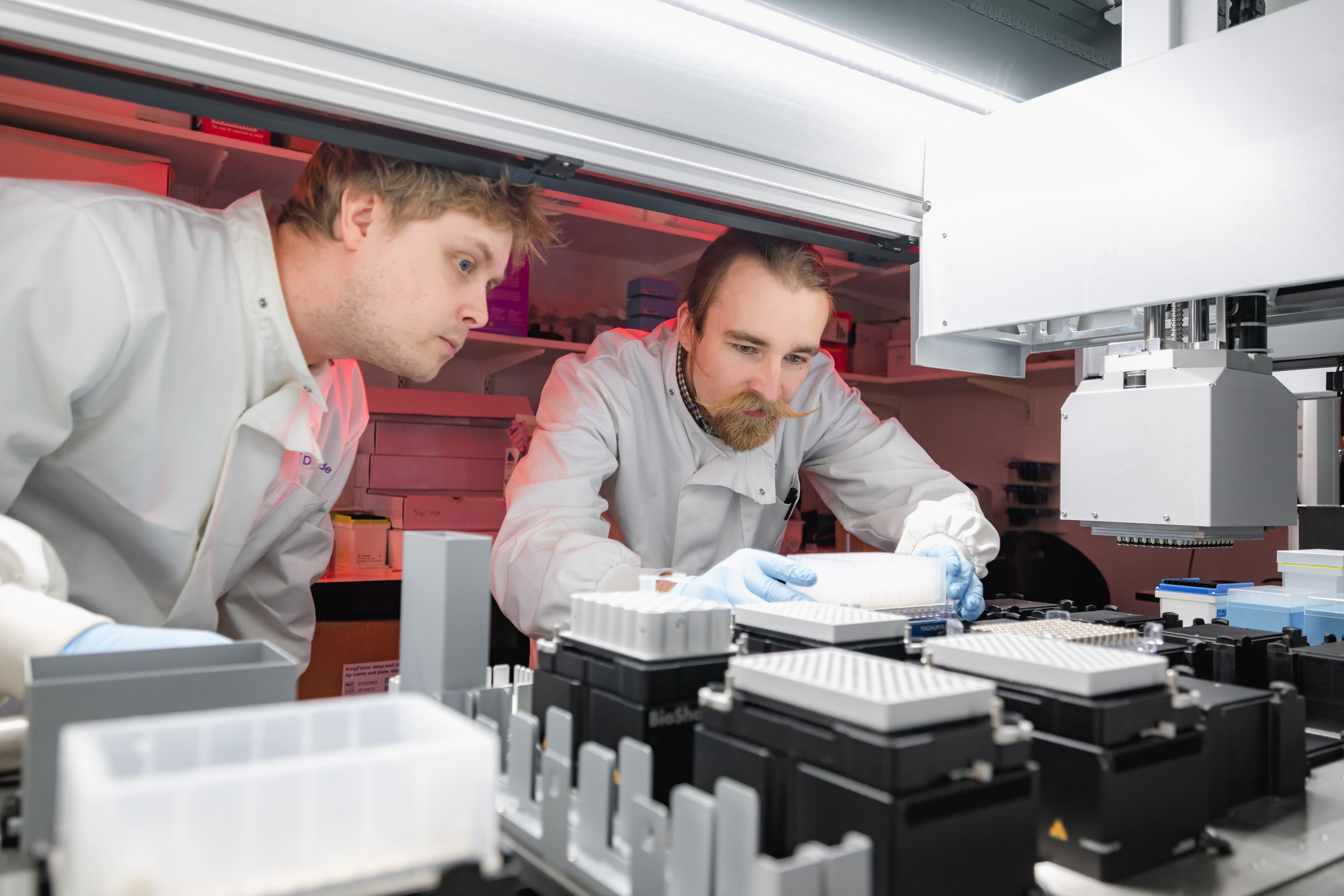

DropCode was founded in 2024 by three Cambridge alumni. The company is accelerating bioengineering with a droplet-microfluidics platform that uses DNA barcodes to run millions of experiments faster and cheaper than ever. Each experiment generates data that feeds directly into AI models, enabling a closed loop where enzyme design and lab validation can inform each other at scale. By generating vast troves of experimental data, DropCode unites AI and biology - powering next-generation biotech breakthroughs.
DropCode is building the next generation of infrastructure for biological engineering - one that begins in the lab, learns in silicon and loops back to real-world tests, making the design of greener chemicals, safer medicines and next-generation biofactories as programmable as writing code.
Elliot J. Medcalf (CEO) did a PhD with Professor Florian Hollfelder (Department of Biochemistry). At DropCode, Elliot is responsible for microfluidics development and bioengineering.
Max Barysevich (CTO) is finishing a PhD with Professor Clemens Kaminski (Department of Chemical Engineering and Biotechnology). At DropCode, Max is responsible for computer vision and optics.
Peter J. Christopher (CE) did a PhD with Professor Timothy D. Wilkinson (Electrical Engineering Division). At DropCode, Peter is responsible for electronics and systems engineering.
We caught up with the team to find out more.
What are the services and products that you offer and the sorts of projects you work on.
Dropcode’s breakthrough technology miniaturises experiments into microscopic droplets that are tagged with a genetic code. This lets the system track and analyse thousands of individual reactions every second - more than 1000 × faster than conventional labs, enabling tens of millions of enzyme variants to be tested in a single day. The resulting data feed AI models that can predict enzyme function for completely novel sequences.
What will be the potential real-world impact of your technology?
Custom enzymes unlocked at industrial scale by DropCode’s droplet-screening engine can redraw manufacturing maps. In pharmaceuticals, tailored enzymes reduce multi-step syntheses for active drug ingredients into single, water-based reactions, slashing solvents, waste and production time.
Beyond pharmaceuticals, the same rapid-evolution workflow lets producers of plastics, textiles, food and cosmetics swap petrochemical catalysts for cleaner protein tools, shrinking carbon footprints across supply chains. Recent estimates suggest that up to 60 percent of the materials the global economy relies on could be produced biologically. DropCode represents the enzyme data engine required to do this.
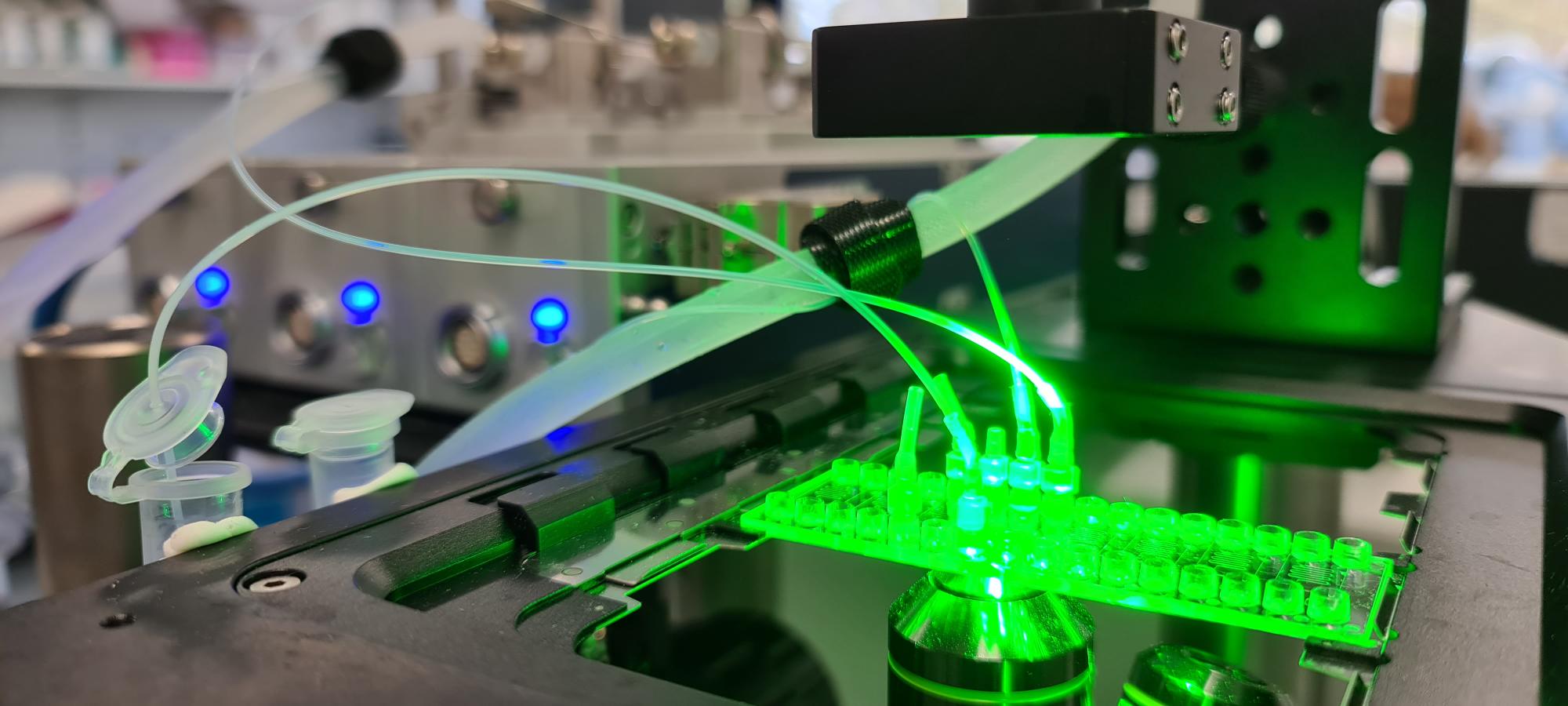 Image above: Droplet imaging running at over 3000 individual experiments per second.
What are your future goals?
DropCode’s next milestone is to turn this torrent of droplet experimental data into the world’s most powerful AI engine for predicting how an enzyme will perform from its genetic code. Yet the same droplet-barcode workflow stretches beyond enzymes: it will be used to map how drug candidates act on their cellular targets, engineer metabolic pathways inside microbes, and profile the behaviour of entire genetic circuits.
The company is building the next generation of infrastructure for biological engineering - one that begins in the lab, learns in silicon and loops back to real-world tests, making the design of greener chemicals, safer medicines and next-generation biofactories as programmable as writing code.