
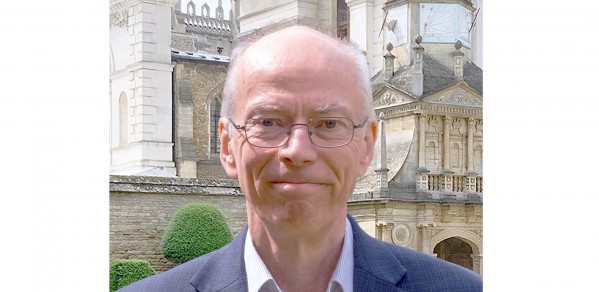
Professor Malcolm Smith has been elected as a Fellow of the Royal Society, the UK’s national academy of sciences.
I am delighted to welcome this newest group of exceptional scientists to the Fellowship of the Royal Society, their contributions reflect the highest standards of scientific endeavour.
Sir Paul Nurse, President of the Royal Society
The new Fellows and Foreign Members join the ranks of Stephen Hawking, Isaac Newton, Charles Darwin, Albert Einstein, Lise Meitner, Subrahmanyan Chandrasekhar and Dorothy Hodgkin.
“I am delighted to welcome this newest group of exceptional scientists to the Fellowship of the Royal Society,” said Sir Paul Nurse, President of the Royal Society. “Their contributions reflect the highest standards of scientific endeavour. Whether advancing our understanding of vaccines or exploring the transformative potential of mathematics and computation, their work exemplifies the enduring value of curiosity, creativity and rigorous inquiry.
“Our Fellowship is strengthened not only by individual distinction, but by the diversity of perspectives and experiences its members bring. This incoming cohort highlights the truly international character of contemporary science and underscores the vital role that plays in achieving breakthroughs that benefit us all.”
Malcolm Smith is Professor of Control Engineering in the Department of Engineering, and a Fellow of Gonville & Caius College. His research is in the theory and practice of control engineering. He has made fundamental contributions across a range of topics in control theory, including H-infinity control, robustness and the gap metric, foundations of systems theory, nonlinear systems, delay systems, adaptive control and filtering, passive network synthesis, and suspension systems. His work is characterised by sharp results which highlight fundamental limits. His research on active and passive suspensions led him to propose a novel mechanical device and concept, coined the ‘inerter’, which made a significant impact in F1 racing and motorsport, and is now extensively researched for a wide variety of applications.
“It is an extraordinary honour to be elected as a Fellow of this esteemed learned society,” he said. “I am conscious of a debt to many people, to my students, for their brilliance and dedication and the enriching experience of our shared journey of discovery, to all who supported me so generously in my University and College and the institutions I have been associated with, and to the exceptional colleagues in academia and industry who I was most fortunate to be able to collaborate with over many years, and whose contribution to my work cannot be overstated.”
Professor Smith is a Fellow of the Institute of Electrical and Electronics Engineers (IEEE), a recipient of the Sir Harold Hartley Medal of the Institute of Measurement and Control (InstMC), a Fellow of the Royal Academy of Engineering, a co-recipient of the IEEE Control Systems Technology Award, a recipient of the Donald Julius Groen Prize of the Institution of Mechanical Engineers (IMechE), a Fellow of the International Federation of Automatic Control (IFAC) and a recipient of the IEEE Control Systems Award.
The Royal Society is a self-governing Fellowship of many of the world’s most distinguished scientists drawn from all areas of science, engineering, and medicine. The Society’s fundamental purpose, as it has been since its foundation in 1660, is to recognise, promote, and support excellence in science and to encourage the development and use of science for the benefit of humanity.
