
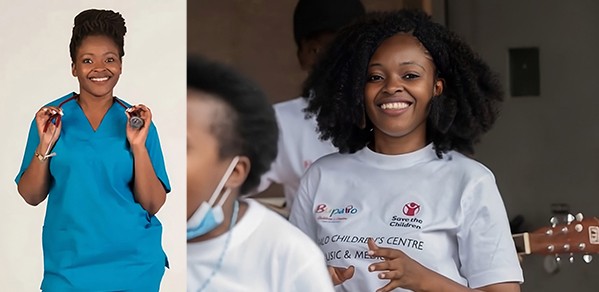
Dr Lengwe Sinkala’s journey from medical school to the International Health Systems Group at Cambridge is driven by a desire to contribute meaningfully to child healthcare. As she prepares for a PhD in Engineering – the next step on her journey – Dr Sinkala will research how paediatric surgical services can be redesigned to better support neurodivergent children.
My journey from medical school to where I am now has been shaped by curiosity, continuous learning and, ultimately, a desire to contribute meaningfully to the care of others.
Dr Lengwe Sinkala
It was while working as a practising clinician across Botswana and Zambia in Sub-Saharan Africa that Dr Sinkala came to recognise that many of the challenges she had witnessed in children’s care are rooted in system design, rather than clinical complexity.
“During my time at a hospital in Zambia, a mother brought her child in after noticing concerning changes in the child’s behaviour, but we didn’t have the specialist support or systems in place to fully address their needs,” she says. “It was a difficult situation, not because of a lack of willingness to help, but because of clear gaps in the system.”
This realisation that the hospital’s healthcare delivery model needed restructuring for better outcomes marked a turning point in Dr Sinkala’s career.
“That experience stayed with me. It made me realise that beyond individual patient care, there are structural challenges that shape outcomes in very real ways. Being on the ground as a clinician meant I could see those gaps firsthand but also begin to think about how they might be addressed.
“That realisation was a turning point. It led me to take more intentional steps towards addressing some of these challenges, including co-founding the Bupalo Children’s Centre, a non-profit organisation in Zambia, in 2018. The aim of the Centre is to support children and families more holistically, beyond a single consultation, and to begin responding to needs that haven’t been fully met within existing systems.”
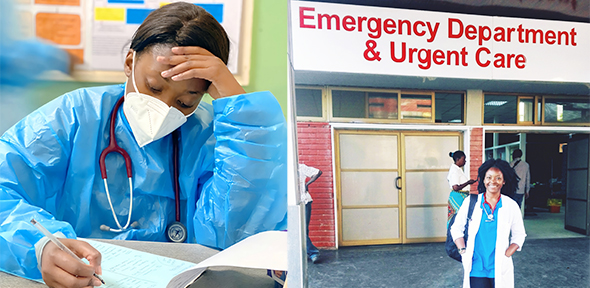
During her time working in a paediatric surgical department in Zambia, Dr Sinkala would sometimes see up to 80 patients in a single day during ward rounds
Redesigning paediatric surgical services for neurodivergent children
Fast-forward to today and Dr Sinkala (Robinson College) is an academic collaborator in the International Health Systems Group, part of the Engineering Design Centre at the Department of Engineering. As a Gates Cambridge Scholar-elect, she will be researching how paediatric surgical services can be redesigned to be more inclusive, responsive and supportive for neurodivergent children. This PhD research, which will begin in October, has been motivated by Dr Sinkala’s earlier experience working in a busy paediatric surgical department in Zambia.
She explains: “We received a high volume of referrals from rural hospitals across the Copperbelt province. On some ward rounds, I would see up to 80 patients in a single day. There was a constant need to balance care and capacity, discharging patients where possible, knowing that new admissions would follow almost immediately. It was a demanding environment but also one that gave me a deep, practical understanding of how the system functions under pressure.
“During this time, I encountered a wide range of paediatric surgical cases, including children with conditions such as hydrocephalus (a build-up of fluid in the brain), as well as children who presented with neurodivergent differences.
“What became increasingly clear was that while care was being delivered, the system was not always designed to fully meet the needs of every child, particularly those requiring more tailored approaches.
“In many ways, my PhD will be a culmination of my clinical experiences, my work in the community, and a growing awareness of what a more thoughtful, patient-centred system design could mean for children and their families.”
Better systems, better care – together
Dr Sinkala describes her experience so far within the International Health Systems Group as “refreshing, motivating and impactful”.
“In many ways, it feels like coming home,” she says. “Being in an environment where people understand the problems you are trying to solve, and are equally committed to addressing them, creates a strong sense of belonging, as we connect through a shared goal of improving health systems and patient care.”
Dr Sinkala adds: “The group is also incredibly supportive. There is a strong culture of collaboration, and Dr Tom Bashford fosters an environment where ideas are encouraged and where each person feels that their work has value and space to grow.”
Collaborative learning and a shared purpose
Gates Cambridge Scholarships fund the work of outstanding, international postgraduate students who show strong leadership potential and a commitment to improving the lives of others.
Dr Sinkala is one of 68 new scholars forming the Class of 2026. Of these, 51 are doing PhDs and 17 are doing MPhils, representing 25 different countries.
“I’m most looking forward to the space for collaboration that the Gates Cambridge community offers,” she says. “I’m excited by the opportunity to be immersed in a space with like-minded individuals who share that sense of purpose. I value the kind of learning that comes from people, the exchange of ideas, perspectives and experiences, and I’m looking forward to how those interactions will shape and strengthen my own work.”
In the future, Dr Sinkala aims to contribute to the strengthening of healthcare systems on a global scale.
“My journey from medical school to where I am now has been shaped by curiosity, continuous learning and, ultimately, a desire to contribute meaningfully to the care of others.
“My goal upon completion of my PhD is to continue working at the intersection of clinical practice and health systems design, with a particular focus on improving how care is delivered for children and underserved populations.
“I also hope to continue growing Bupalo Children’s Centre into an initiative that can benefit communities across Zambia and potentially beyond. In parallel, I would like to work with organisations focused on strengthening healthcare systems, applying the skills and experience gained during my PhD into projects that are both meaningful and impactful on a broader, global scale.”
