
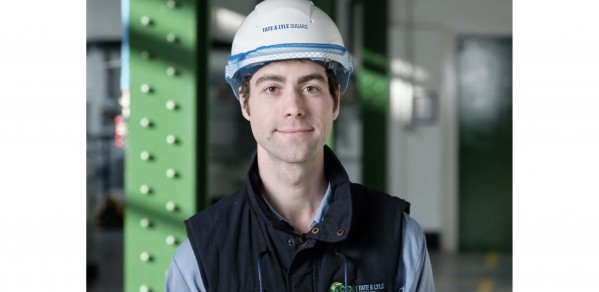
Thomas has built a career driven by a passion for improving manufacturing. His story is rooted in curiosity about how things work, a drive to improve the systems around him, and a determination to make a tangible impact.
The Manufacturing Engineering Tripos course is a brilliant bridge between engineering theory and the real world.
Thomas Sutton, of Tate and Lyle
Who: Thomas Sutton, Continuous Improvement Manager at Tate & Lyle Sugars
What: University of Cambridge Master of Engineering (M.Eng.), Manufacturing Engineering 2010 - 2014
Why: Driving continuous improvement to make manufacturing more efficient, sustainable, and people focused.
Much of what Thomas learnt during his early studies at the Institute for Manufacturing (IfM), have enabled him to deliver multi-million-pound process improvements and shape the future of operations at Tate & Lyle’s historic London sugar refinery.
Impactful learning
For Thomas, the path to manufacturing impact began in the lecture theatres, workshops, and industrial site visits offered at the IfM. After two years of general engineering at the University of Cambridge, he joined the IfM’s Manufacturing Engineering Tripos (MET) programme, an option for the final two years of the four-year MEng degree.
“The MET course is a brilliant bridge between engineering theory and the real world,” Thomas recalls. “A 10-week internship at Brompton Bicycles in 2013 first set me down the road of wanting to work in factories. While there, I developed designs for a lower-cost Brompton bike model that would be accessible to a wider market, considering aspects of product design as well as supply and sourcing options. I like to think some of my ideas were subsequently integrated into the A Line model released 8 years later. A highlight of my time was brazing and building up my own custom bike, which I still ride today. The experience cemented my decision to opt for MET and become a manufacturing engineer.”
During his time at the IfM, the industrial visits and in-company projects stood out as pivotal experiences that helped define Thomas’s career path. A four-week Lent term project at Bespak, a company specialising in the design and manufacture of inhaled and nasal drug delivery devices, focusing on machine reliability and preventive maintenance routines, areas that are vital in any factory, proved to be a turning point. The camaraderie he experienced while working with operator and technician groups to identify the root causes of their problems and make their work easier is a theme he has encountered repeatedly since, and it continues to be a central source of satisfaction in his career.
“The site visits in the third year and placements in the fourth year were critical in showing me what real manufacturing roles looked like and where I, as a graduate from Cambridge, could fit in and be useful in a company,” remembers Thomas. “The academics at the IfM do all they can to expose students to real-world manufacturing context, showing them alternative options and possibilities. For me, this was invaluable in helping guide my career path”
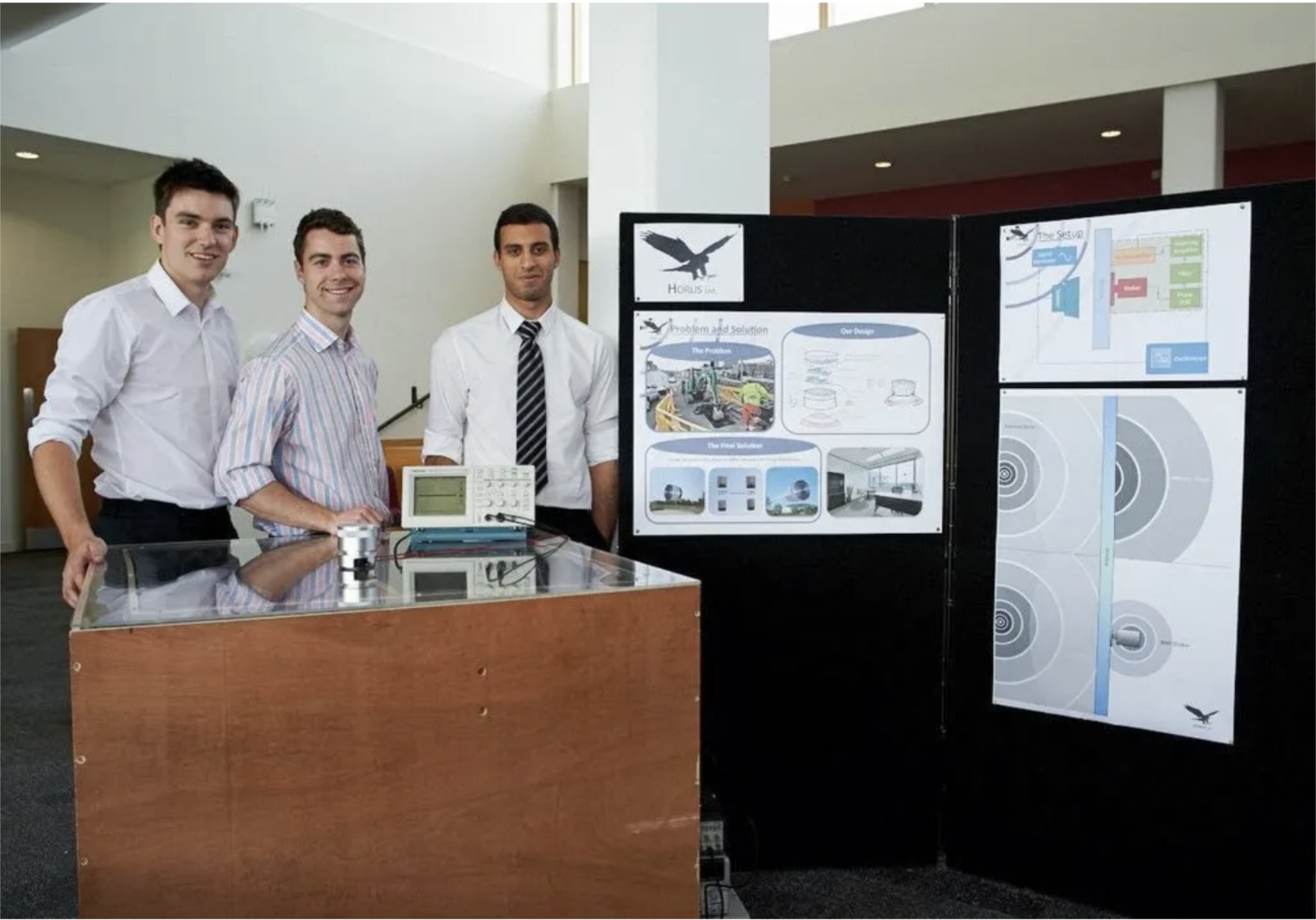 Undergraduate Thomas (centre) with his Design Project team at the IfM
The journey
After graduating in 2014 and wanting to work in a manufacturing role in a factory in London, Thomas joined Tate & Lyle as a graduate packing engineer.
“The 148-year-old factory, which sits on 45 acres of land on the bank of the River Thames, consists of 21 packing lines that carry 80 to 120 bags of sugar per minute,” explains Thomas. “I was initially working on those lines, understanding where operations went wrong and making small optimisations. By my second year, I was tasked with commissioning a new line, with a budget of £8 million. It was a fascinating project to be involved with and exposed me to the international side of the business too.”
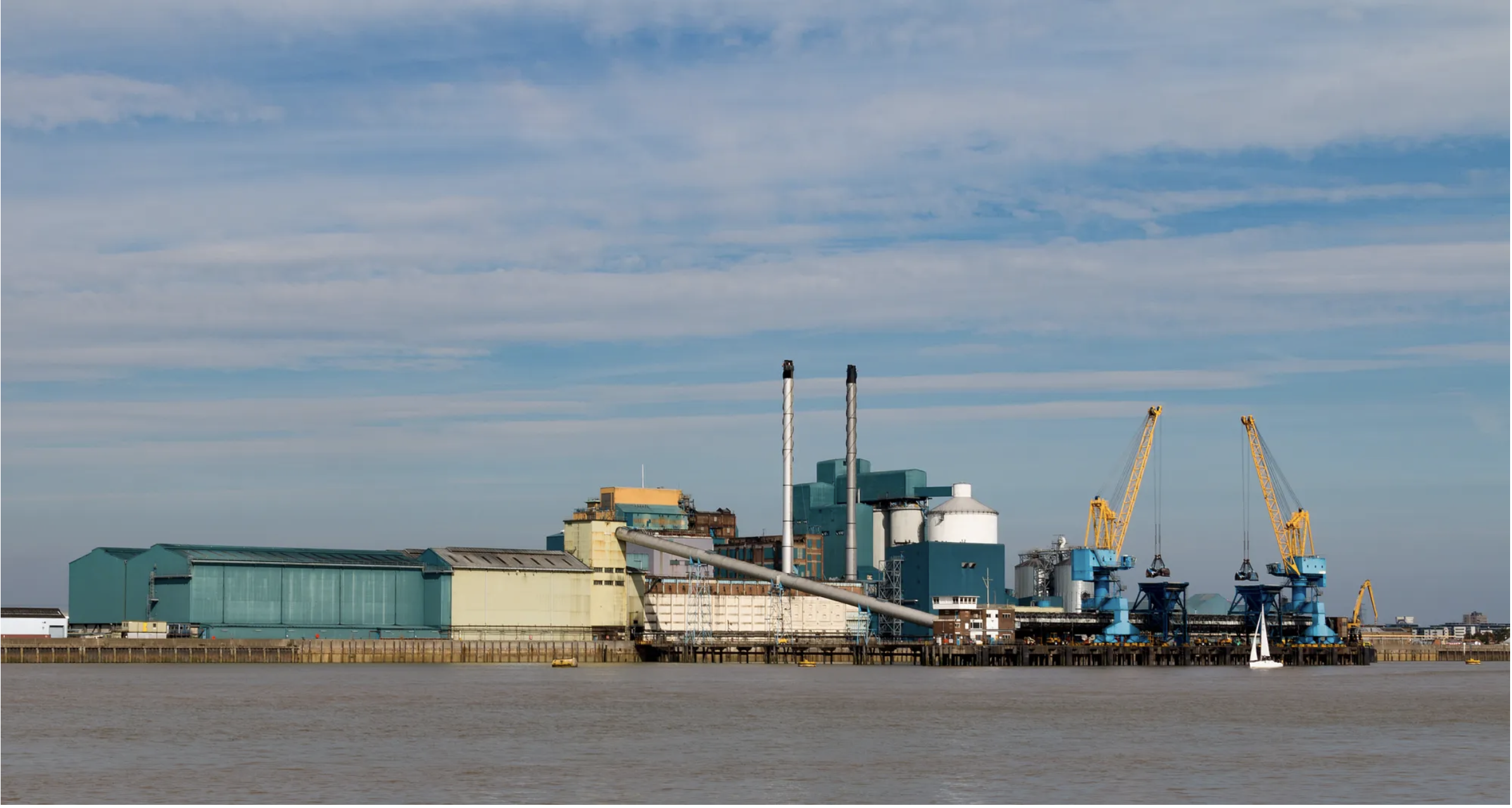 The Tate and Lyle sugar refinery on the banks of the River Thames
Thomas drew on his background at the IfM, where projects demanded both fast learning and practical solutions, to manage the technical and organisational challenges of the new line. Within the six-month commissioning period, this work achieved a performance of 80% Overall Equipment Effectiveness (OEE), a key metric measuring the efficiency with which a piece of equipment or production line is utilised. With 85% considered world-class, this result represented a significant achievement.
Having undertaken further major projects, an opportunity presented to complete Lean Six Sigma black belt training, which equips individuals with advanced skills to lead complex process improvement projects.
“I had always enjoyed the improvement aspects of my roles. Even during my industrial projects at the IfM, I found I was most engaged when we were diving into processes, understanding how they worked, and figuring out how to make them better. I knew this was the direction I wanted my career to take,” says Thomas. “Having earned the Lean Six Sigma qualification, the Continuous Improvement Manager role was the next natural step, and one which the company took a chance to appointment me to far earlier in my career than I expected”
Impactful people
As a Continuous Improvement Manager, Thomas describes his role as “a department of one with a budget of zero and an infinite potential to improve the efficiency of the factory”. His projects have resulted in cost savings of several million pounds per year, through initiatives such as waste reduction, energy savings, chemical and packing optimisation and reductions in steam and compressed air use.
“The biggest impact projects are those that require energy use, such as through reduced steam requirements, for which a 1 tonne per hour reduction in usage can represent a quarter million pounds of savings, and improvements to packing lines which result in less worker overtime costs,” says Thomas.
He’s also stayed connected to the IfM, hosting MET and MPhil in Industrial Systems, Manufacture, and Management (ISMM) student projects at Tate & Lyle, with project outcomes being implemented into the factory. These projects typically focus on packing line reliability, where students can deliver a tangible impact during their time on site. They also highlight the importance of not only hard engineering measures, but also the softer human connections that help change behaviours and drive lasting performance improvements.
“It’s rewarding to provide students with the same kind of real-world challenges that helped me grow and to see their fresh perspectives in action,” explains Thomas, “it is also very satisfying to see them grow in confidence, working independently in what can feel like an alien industrial environment and far removed from the spires of Cambridge”.
Looking to the future, Thomas has recently completed his MBA at Henley Business School through the Level 7 apprenticeship route, which provides a pathway for individuals to gain a postgraduate qualification while working. The projects he undertook as part of this course built on many of the seeds planted at the IfM and helped him develop a much broader understanding of Tate & Lyle’s global operations beyond the London refinery. He hopes this will position him to take on a more senior role in the European business, integrating Continuous Improvement best practice across the company’s four European sites.
“The MET course taught me how to break down complex systems, identify opportunities, and work collaboratively to deliver change. That skillset has been invaluable at every stage of my career,” says Thomas “I hope to continue to host impactful student projects at our site, perhaps beyond just packaging operations areas. My personal aspirations are to continue in the UK manufacturing sector, working at a more senior level to develop strategy to improve production efficiencies and minimise the impact of industry on the environment”.
Miles for minds
Beyond his professional work, Thomas has led “Miles for Minds,” an internal Tate & Lyle initiative encouraging employees to log physical activity in support of mental health awareness. In 2025, the campaign saw 150 participants contribute over 12,000 miles of swimming, running, cycling and walking globally, raising awareness and fostering community spirit across the company.
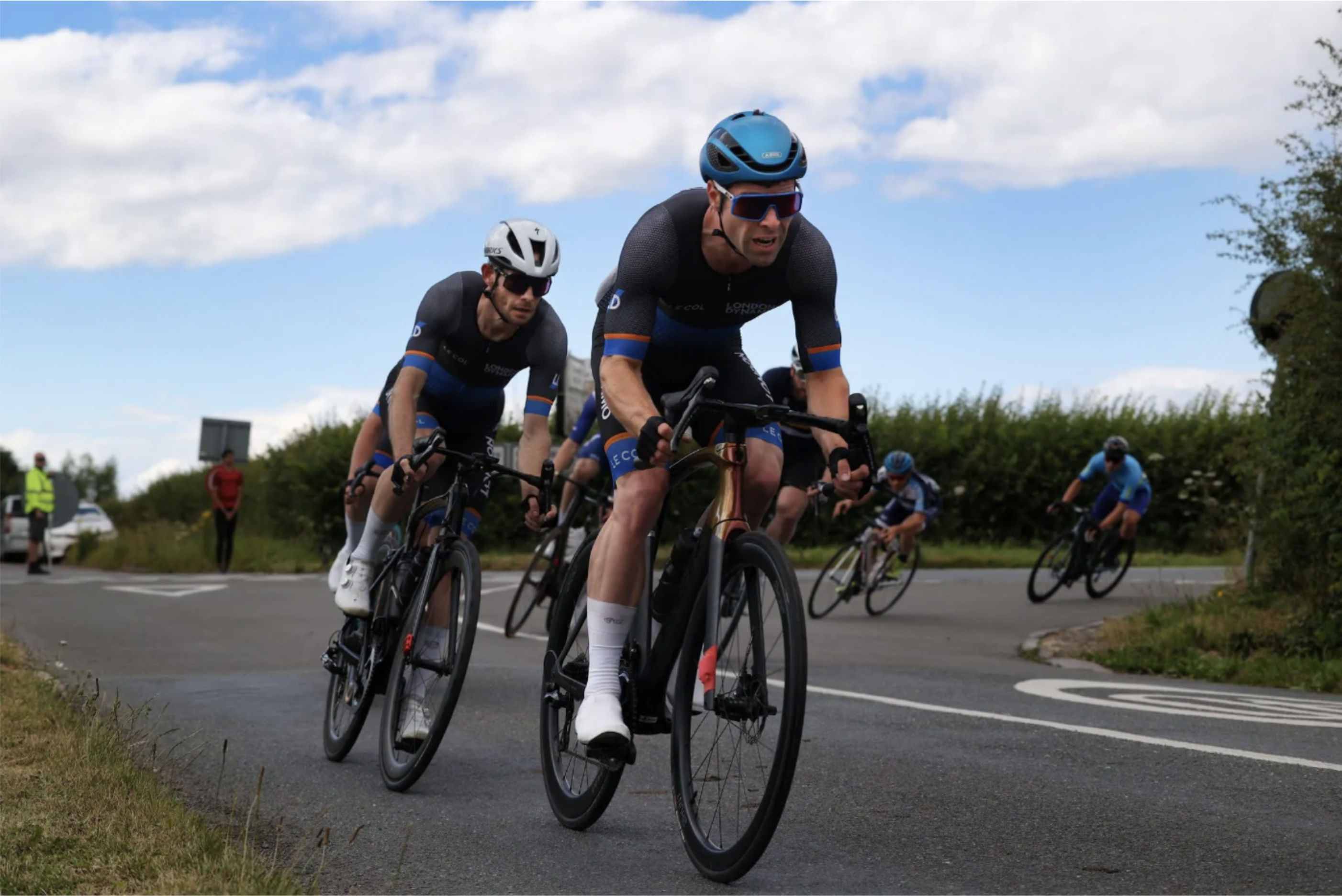 Thomas on his bike as part of the ‘Miles for Minds’ initiative.
“I’m proud of what we’ve achieved with Miles for Minds,” Thomas says. “It’s a reminder that manufacturing isn’t just about machines and processes, it’s about people, and improving ourselves as well as the factory. Balancing work and play is a skill that Cambridge taught me through keeping up with a hectic lecture schedule, alongside rowing for Magdalene College first boat. Seeing others pursue active hobbies alongside their busy professional lives is always inspiring”
The IfM featured Thomas as part of its From Learning to Impact series of interviews on the leaders and change-makers of the future originally published on the IfM Medium blog.
