

In 2026, the Institute for Manufacturing (IfM), part of our Department, marks 60 years of manufacturing engineering education at Cambridge, celebrating a programme that has shaped generations of manufacturing leaders and which continues to evolve in response to industrial change.
Experiential education endures because it equips students to deal with ambiguity, complexity, and real-world industrial challenges. If manufacturing is to remain innovative and resilient, we must continue to develop people who can lead change in practice, not only in theory.
Professor Tim Minshall
The course began in 1966 as the Advanced Course in Production Methods and Management (ACPMM). Initially funded by 96 companies that recognised the value of graduates with practical, hands-on experience, the course immersed students in real industrial projects from the outset – an emphasis that would become a defining feature of the programme.
Over six decades, the programme has grown from an initial cohort of 12 students to a global community of more than 1,800 alumni working across manufacturing, technology, consulting, entrepreneurship and policy. During this time, the course has evolved to reflect the growing complexity of manufacturing.
In the 1980s, a design element was introduced, creating the Advanced Course in Design, Manufacture and Management (ACDMM). Then in 2004, the programme became the formal MPhil degree in Industrial Systems, Manufacture and Management (ISMM), as it is today, solidifying its place within Cambridge’s formal academic structure.
Professor Tim Minshall, Head of the IfM, says the longevity of the programme reflects a consistent commitment to learning grounded in industrial reality: “What has kept this course relevant for 60 years is that it’s never been just classroom learning. Students are taught the core engineering and management tools, but they develop their judgement by applying them immediately in real industrial settings – learning how to ask the right questions, work with uncertainty, and deliver practical change.”
Learning grounded in industry
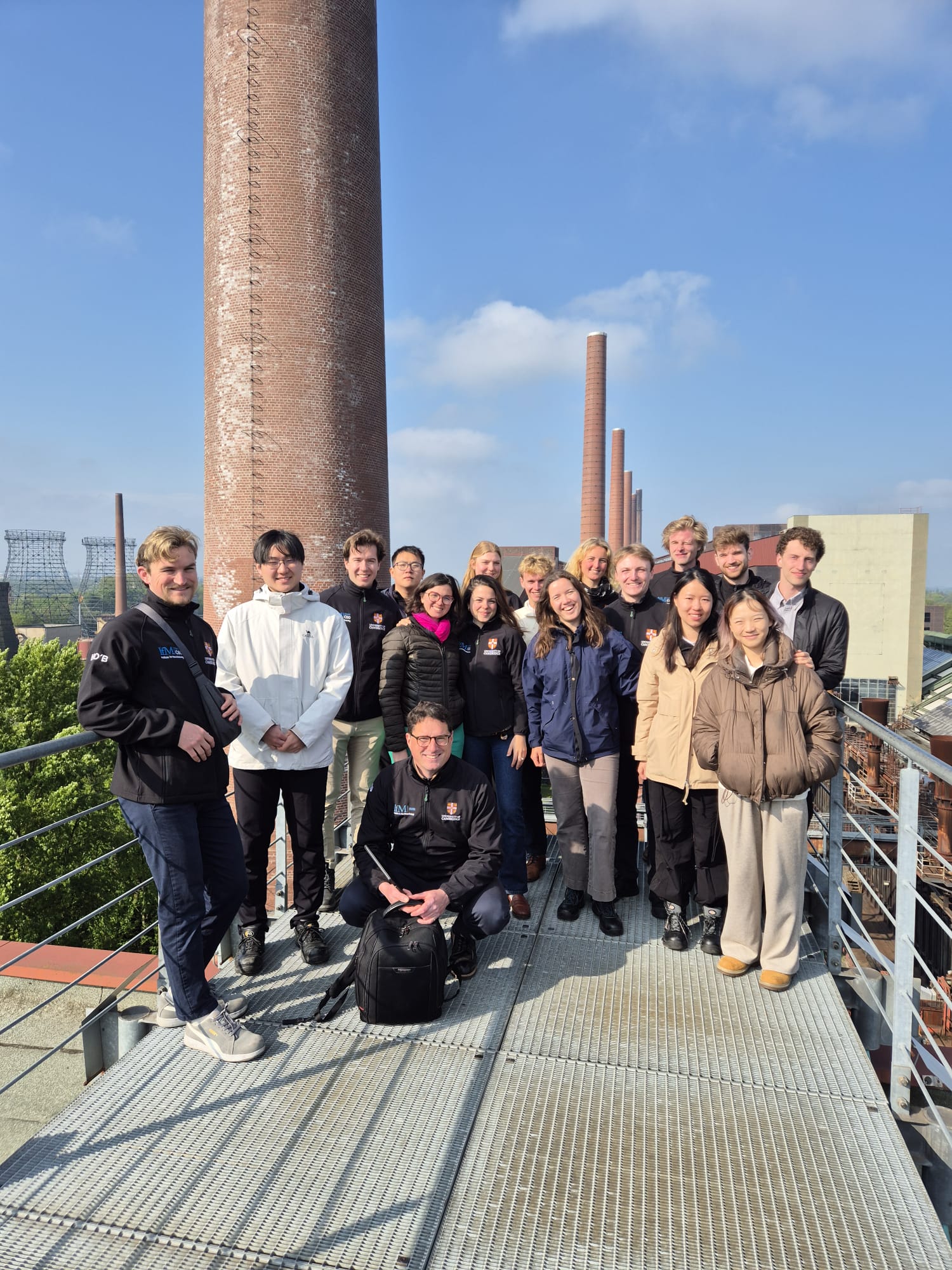
2026 ISMM students on their study tour in Germany, pictured with course director Dr Florian Urmetzer (front, centre), at UNESCO Stiftung Zollverein World Heritage Site
True to its origins as an industry-embedded programme, the course provides students with an integrated view of manufacturing engineering, combining rigorous taught modules with industrial projects and visits. Graduates develop a strong technical understanding of markets, product and process design, and operations and supply chains, alongside the professional skills needed to work confidently across organisational and disciplinary boundaries. These skills continue to make graduates sought-after across industry.
“In-company projects solving real business or technical problems are what make the ISMM unique, and we try to give students as wide a range of opportunities as possible by working with lots of different-sized companies,” explains Vanessa McNiven, ISMM Executive Course Director.
“In a typical year, students visit around thirty companies that range in size. These cover a wide range of industrial sectors, including aerospace, automotive, beverages, chemicals, consumer products, defence, electronics, energy, food, healthcare, measurement systems, metals, pharmaceuticals and textiles.
“Students also get a chance to go overseas to see industry in a different culture and context – this really provides the students with a truly international perspective on manufacturing. In the recent past, our students have visited companies in countries including Japan, Germany, the USA, France and Switzerland.”
Gloria Simanjuntak, a 2024/25 ISMM student, explains: “The course is much more than just learning theories – it’s about taking those theories and applying them in real-world contexts. Working on live projects, engaging with experts, and building connections with companies across different sectors have been invaluable in helping me understand how industries work and what it takes to make them more sustainable.”
Dr Florian Urmetzer, ISMM Course Director, describes the programme as designed to build confidence as well as capability: “Students arrive with strong academic backgrounds, but the course helps them develop professional judgement. It gives them the opportunity to work with complex industrial situations, and to learn how to ask the right questions in real time.”
That confidence-building element is something alumni continue to reflect on years later. Alice Richard, founder of Co-CREATE ImpACT, credits the programme with shaping her mindset as much as her skills: “Anyone can be a catalyst for change, regardless of their starting point. The key is having a can-do attitude and believing in yourself – a valuable lesson I learnt at the IfM, and one I aspire to pass on.”
Long-term industry partners also point to the tangible impact students have had on their organisations. Dave Ford, Head of Production, Bowers & Wilkins (UK) said: “I am extremely happy to have worked with these students over the past eight years. They complete tasks effectively, are highly critical, and possess the right mindset to drive change and progress in our work. When I look at our production facility now, I can see how the years of collaboration have positively influenced us both as a company and as a production site. We have made some very good decisions based on the work they have contributed, including choosing not to pursue certain options.”
He also reflected: “One team of students took on a problem we encountered in a project, developed their dissertation topic around it, and subsequently started a startup to address that issue. We are now collaborating with them as well. It is wonderful to be part of this journey.”
Reflecting on six decades of educational innovation
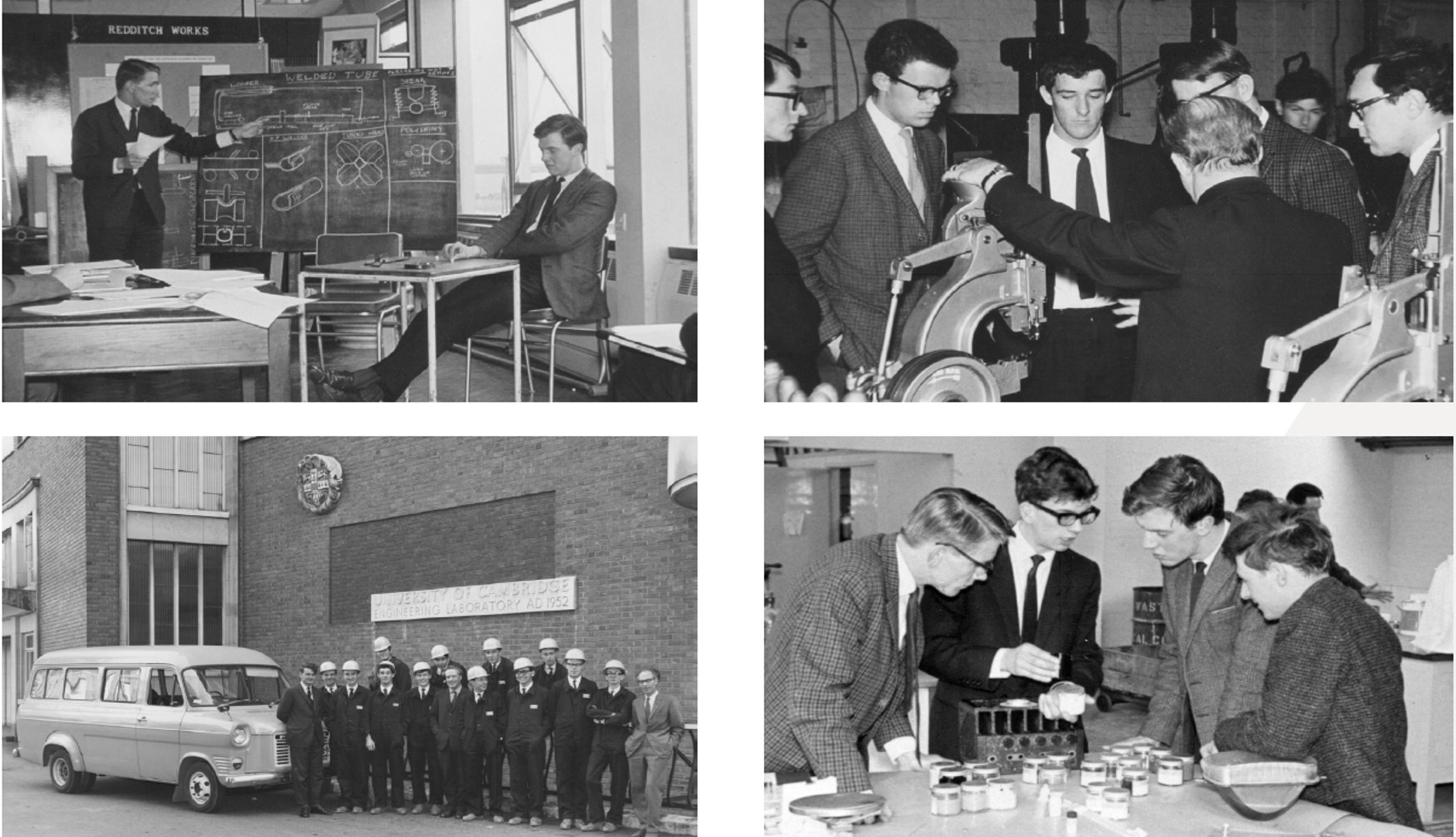
Students, pictured in 1966, on the first Advanced Course in Production Methods and Management [click to enlarge]
The programme’s influence is reflected in the breadth of roles its graduates go on to fill – often in sectors far beyond the factory. DJ Hamblin-Brown, founder of healthcare coordination platform CAREFUL, says the course helped him build the skills to move between worlds: “Developing analytical and engagement skills taught me how to articulate my ideas effectively, from the shop floor to the boardroom. It’s essential to communicate complex problems clearly to everyone…and to think through challenges systematically to find innovative solutions.”
The anniversary also provides an opportunity to reflect on how manufacturing education must continue to adapt. A new working paper, with contributions from across the IfM’s teaching programmes, examines the evolution of manufacturing education at Cambridge over six decades. It also considers how programmes may need to respond to emerging drivers such as AI, sustainability pressures, geopolitical instability, and changing patterns of lifelong learning.
Dr Urmetzer notes that the anniversary is as much about the future as the past: “Manufacturing is changing rapidly, and education has to keep pace. The anniversary is a chance to celebrate what has been achieved, but also to think seriously about what industry will need from manufacturing leaders in the next decade.”
Investing in the next 60 years
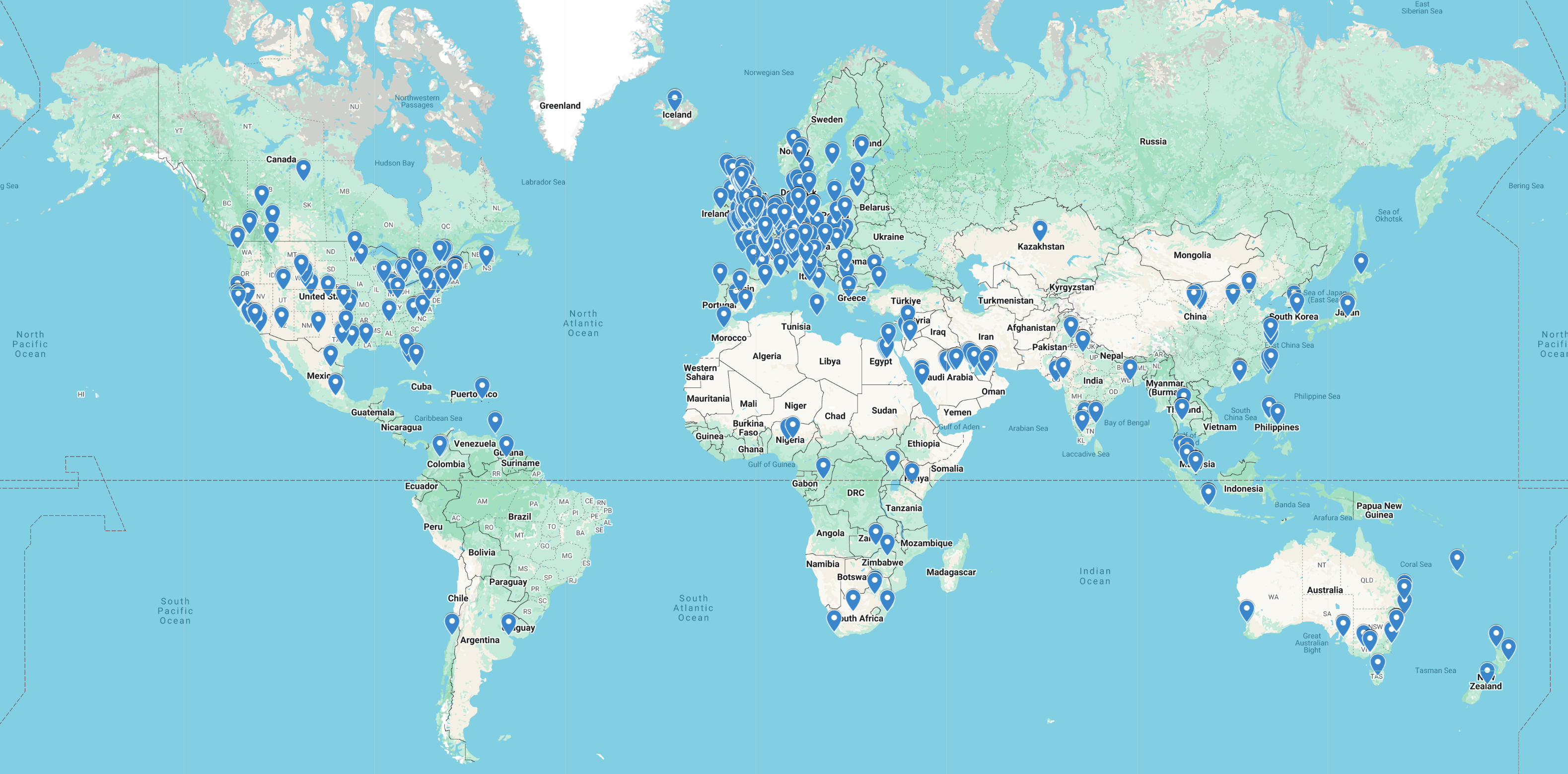
Map highlighting the global locations of the programme’s alumni [click to enlarge]
To support this long-term development, the IfM has launched a 60th Anniversary Fund. The fund will strengthen access to the programme through student support, enhance the learning experience through additional industrial teaching capacity and facilities, deepen engagement with industry, and support the development of new routes, including a potential new MSt course.
Professor Minshall says the programme’s continued relevance depends on maintaining its distinctive blend of academic rigour and industrial engagement: “Experiential education endures because it equips students to deal with ambiguity, complexity, and real-world industrial challenges. If manufacturing is to remain innovative and resilient, we must continue to develop people who can lead change in practice, not only in theory.”
Find out more
Further information, including access to the working paper, alumni case studies and the 60th Anniversary Fund, is available here.
This article first appeared on the IfM Insights page.
