
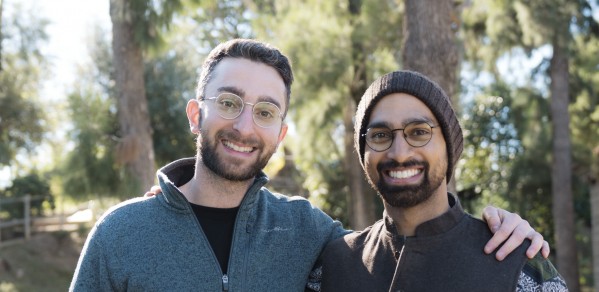
Apurva Chitnis and Jad Esber first crossed paths through Headstart, a residential summer school programme, before going on to read Engineering at Emmanuel and Magdalene colleges. Both were selected for Royal Academy of Engineering Leaders Scholarships and spent much of their time as undergraduates building and debating the intersection of technology and society.
“The bottleneck in AI isn’t capability, it’s access to context - and that context should be controlled by the individual.”
Apurva Chitnis
After Cambridge, their paths diverged in complementary ways.
Apurva focused on information engineering, joining Improbable a venture builder and technology company, early and helping scale the company from around 35 people to over 600. His work centred on world models and distributed systems, building large-scale, reliable infrastructure.
Jad gravitated toward creative tools and internet platforms, joining YouTube to help scale early creator programs in emerging markets, before going on to Harvard Business School. He later joined the Berkman Klein Center for Internet & Society, where he focused on platform incentives and the impact of AI on consumer experiences.
They stayed closely connected, continuing to exchange ideas and support each other. Over time, it became clear they wanted to build together, and Apurva moved to join Jad.
They started Koodos, a company grounded in a simple observation: much of what defines our digital lives is captured in data, yet that data remains locked inside platforms, largely inaccessible to the individual.
They saw an opportunity to change that, building a system where people can bring their data together in a space they control, and where access is granted on their terms.
This reflects a broader shift from platform-centric systems to people-centric ones. Instead of software being organised around where data lives, it can be organised around the individual and their context.
To do this, they built a personal context platform called Shelf, which is used by millions of people to track and understand what they consume.
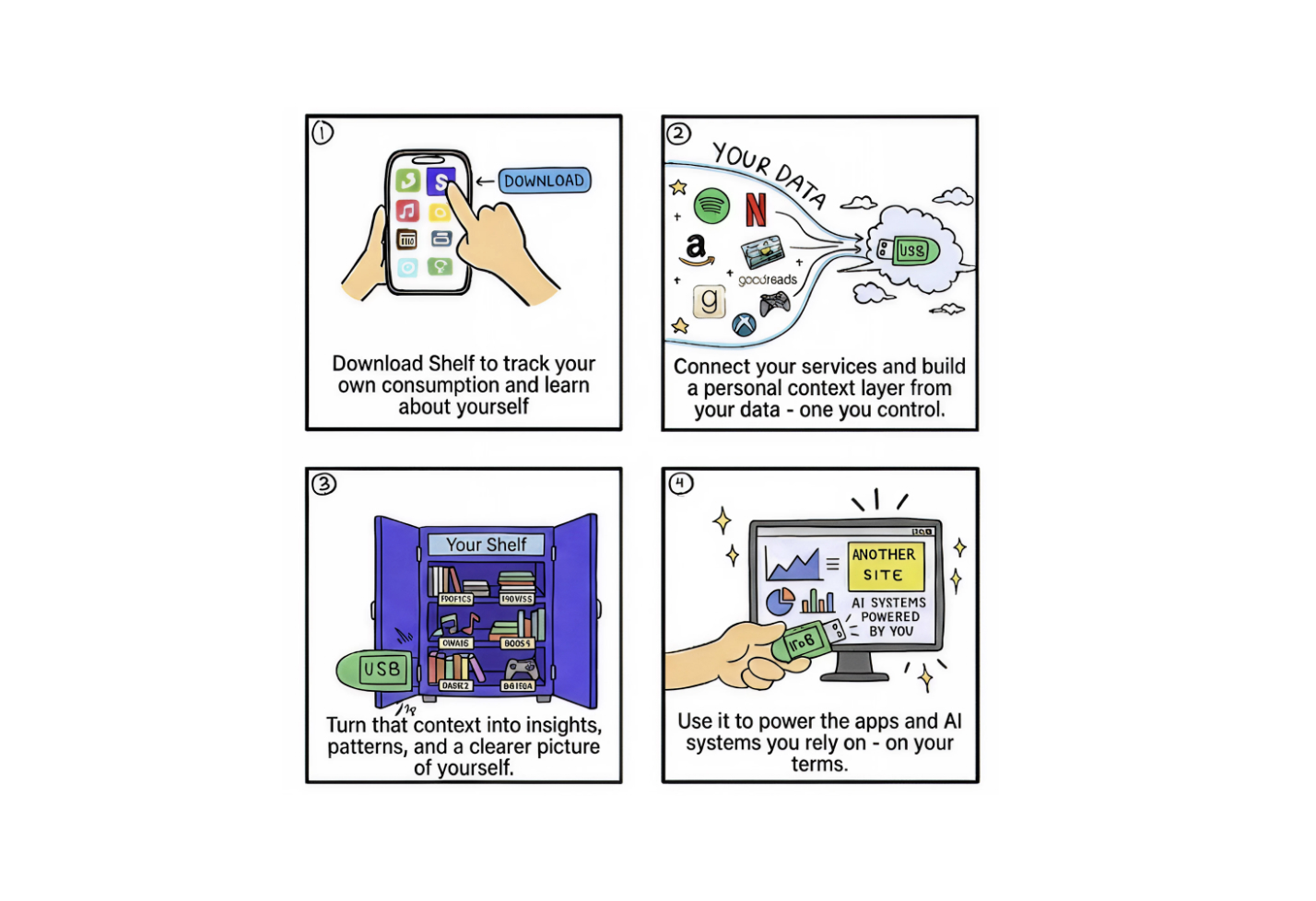
Shelf connects to the services people already use, bringing that activity into one place and turning it into patterns, insights, and recommendations. It gives people a clearer view of their own tastes and habits.
More broadly, Shelf is becoming a foundation for how AI systems interact with individuals. As AI agents become more capable, they increasingly depend on real user context. Shelf allows individuals to aggregate their data and, if they choose, grant systems access to that context so they can act in more useful and personalised ways.
Together, they’ve raised over $19M, backed by investors including TQ Ventures, First Round Capital, M13, Mozilla Ventures, Betaworks, Common Metal, Stellation, and others, alongside pioneers such as Biz Stone (co-founder of Twitter) and Mark Pincus (founder of Zynga), with Pinterest co-founder Evan Sharp on the board.
On the technical front, they’re building across two layers: a single compounding intelligence engine that aggregates and learns from data across services, with two interfaces, one for individuals and one for the AI systems that act on their behalf.
“Shelf is both a window into your digital life and a mirror of who you are.” Jad
But what they find most rewarding is seeing a concept they invented become part of everyday life. Their favourite moments have been hearing from friends and peers about spotting strangers using Shelf in public. That’s why they got into engineering in the first place: to build things that many people use, and that give individuals more agency over their lives.
“The bottleneck in AI isn’t capability, it’s access to context - and the individual should control that context.” Apurva
Their advice to aspiring engineers is simple: focus on fundamentals, build early, and invest in the people around you. The path is long and unpredictable, and your future collaborator may already be sitting next to you.
Professor Geoff Parks speaking about Jad and Apurva said: "I was the course leader for our Headstart summer schools from 1999 to 2016. Many of the students on those courses went on to read Engineering at Cambridge. It is always a pleasure to find out when they have achieved great success in their subsequent careers, as Apurva and Jad clearly have, and to think that I might have played a small part in helping them on their way."
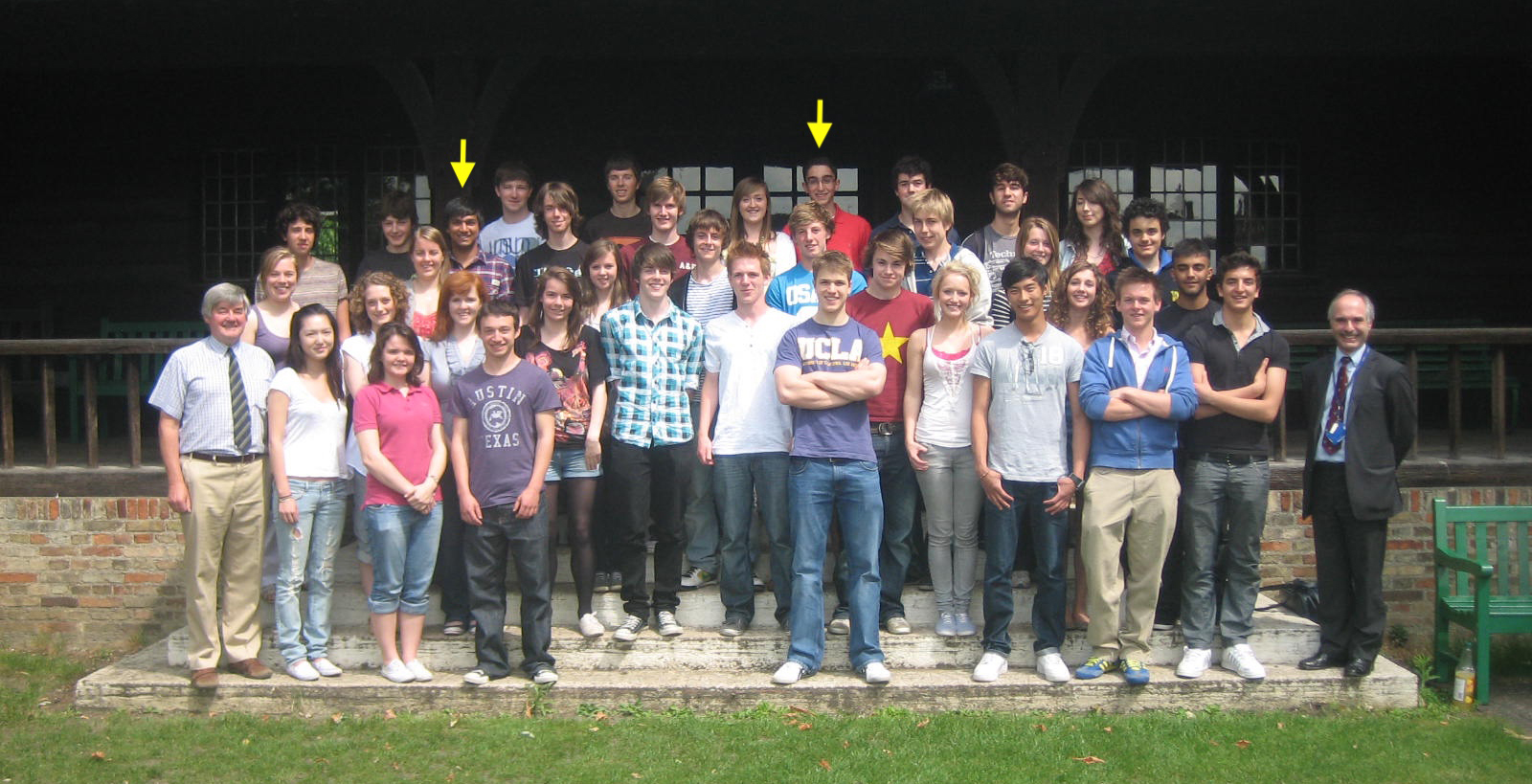
Group photo Headstart summer school 2010 with Jad and Apurva
