
![[LEFT] An example of a continuous glucose monitor (CGM) that uses modern wireless technology. [RIGHT] PhD student Chris Toavs](https://www.eng.cam.ac.uk/sites/www.eng.cam.ac.uk/files/styles/full_bleed_inner_page_leading/public/uploads/news/images/resized9d7542cd-72d1-4348-a62d-0b64b2a0d6d9-copy.jpg?itok=RCx8-A_d)
PhD student Chris Toavs has turned her own personal experience living with type 1 diabetes into motivation for advocating for others and tackling single-use plastic waste in diabetes care. By focusing on engineering design and sustainability principles, Chris is researching how devices and products used to manage diabetes can be reused, refurbished or recycled.
There are very few waste quantification studies that capture the scale of diabetes plastic waste. Diabetes is complex: the amount of insulin I need this week may be wildly different from the amount I need next week. That constant fluctuation means people with diabetes need flexibility and unhindered access to supplies.
PhD student Chris Toavs
Having managed the disease daily since her teenage years, Chris has first-hand experience of the substantial volumes of single-use medical devices required. Such items – including, for example, disposable insulin pens, continuous glucose monitors (CGMs), test strips, lancets and associated packaging – generate significant lifecycle pathways of plastic waste within the healthcare system.
Type 1 diabetes affects approximately 280,000 people in England alone, with prevalence rising considerably over the past three decades. This means an increase in medical supply usage resulting in more plastic waste.
For her PhD in Sustainable Engineering, Chris (Christ's College) is researching the circular economy to mitigate the environmental impact of single-use plastic in diabetes care technology and supplies. The intention of this approach is to design and produce devices with the aim of being reused, refurbished or recycled, depending on the level of feasibility.
Her aim is to create a more sustainable field without compromising patient health, a conversation that, she says, has been initiated in the healthcare field but has yet to reach diabetic care.
Chris, who holds a Master of Science (MSc) in International Health Policy, is based at the Resource Efficiency Collective, part of the Engineering Design Centre, under the supervision of Professor Jonathan Cullen and Dr James Smith.
Chris is also Global Advocacy Manager at T1International – a non-profit led by people with and impacted by diabetes for people with diabetes. In this role, she was successful in leading the organisation’s application to add rapid-acting insulins – which help manage blood glucose levels – to the World Health Organization (WHO) Essential Medicines List (EML). The EML is a register of minimum medicine needs for national healthcare systems. It operates as a guideline for countries to build their own national lists and can lead to long-term supply, lower costs, and equitable, sustainable access to medicines.
“Now that rapid-acting insulins have been added to the WHO EML, this opens treatment options to all who are living with diabetes, particularly those in low- and middle-income countries,” says Chris. “The next phase in our work at T1International is to ensure on-the-ground implementation. I am now working with other patient organisations to make this a reality.”
Rapid-acting insulins are grown in a laboratory and are chemically very similar to the insulin made by the human pancreas. When you have diabetes, your body does not make enough insulin or the insulin that it makes does not work properly. Rapid-acting insulin works very quickly and helps to replace what your body cannot produce.
From “diabetes girl” to patient advocate – informing and educating for the future
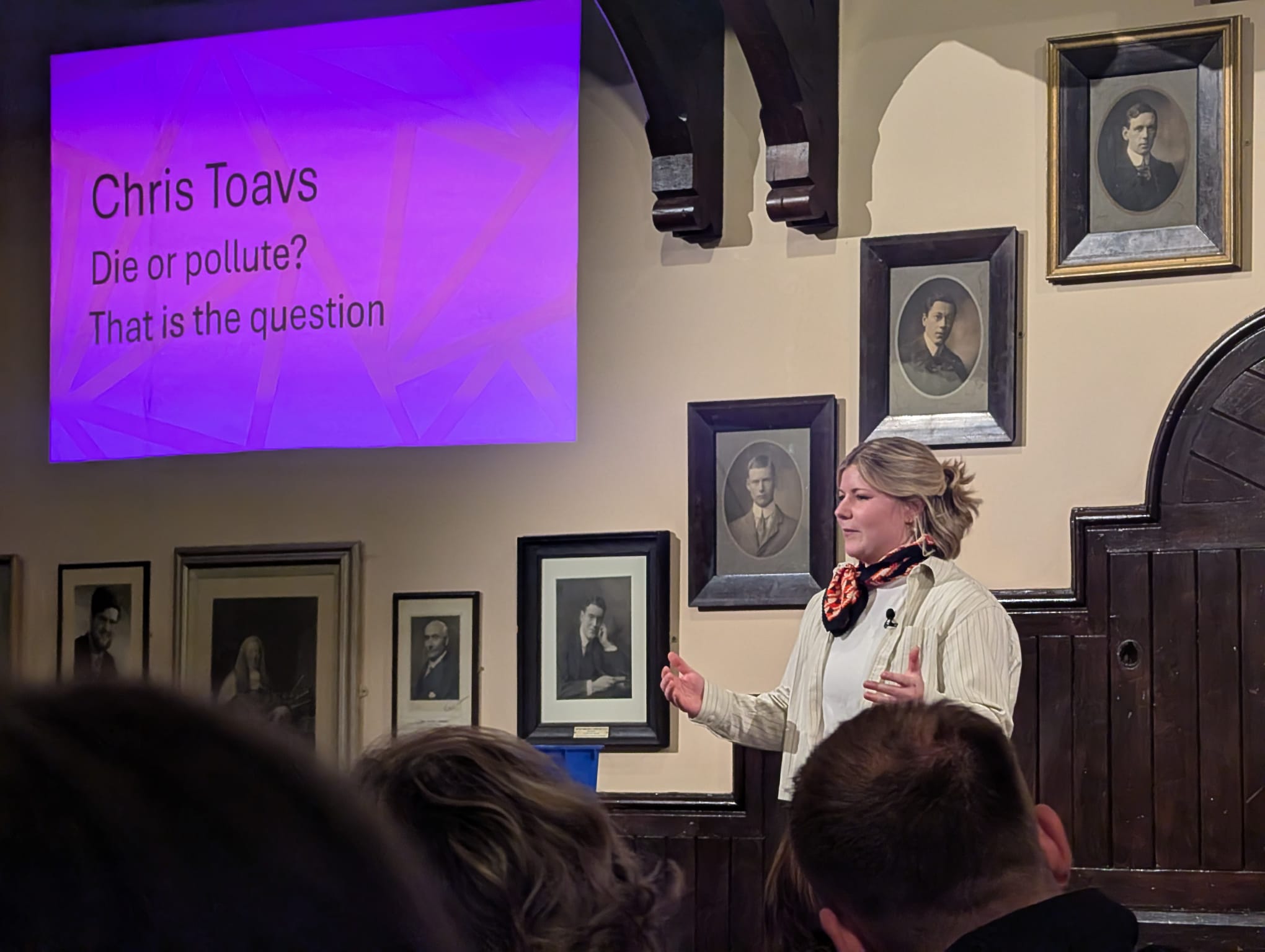
For Chris, who was diagnosed with diabetes shortly after her 13th birthday, diving headfirst into educating others and advocating for greater visibility of the disease became a source of solace.
“The day of my diagnosis was quite traumatic as I was in diabetic ketoacidosis, the point at which there is so much glucose in your blood and no way for the body to convert it into adenosine triphosphate (ATP) to keep the body running, so your body starts shutting down your organs one by one.
“My time in the intensive care unit felt like a fever dream, with overwhelming information to learn on how to manage my new life.
“You cannot live without insulin, so, access to artificial insulin when your body no longer produces it, is essential for life. There is no cure for type 1, so I must always rely on insulin and medical devices to sustain my life.
“I had no idea what type 1 was before my own diagnosis and in my experience many people don't understand how diabetes works and how severe it is.
“Throughout middle and high school, I became the ‘diabetes girl’, optimising every speech, presentation and research paper to talk about diabetes. This theme continued in my undergraduate degree where I started as a nursing major and then switched to English and political science after realising I loved researching and writing, working from a research paper on insulin patents.”
Chris’ honours thesis extended this topic by detailing a pathway to providing free insulin, like the model adopted for the distribution of the COVID-19 vaccine in the United States.
Fast-forward to today, and Chris has nearly completed the first year of her PhD at Cambridge and is enjoying the interdisciplinary nature of learning that the Resource Efficiency Collective provides.
Diabetes care – why one size does not fit all
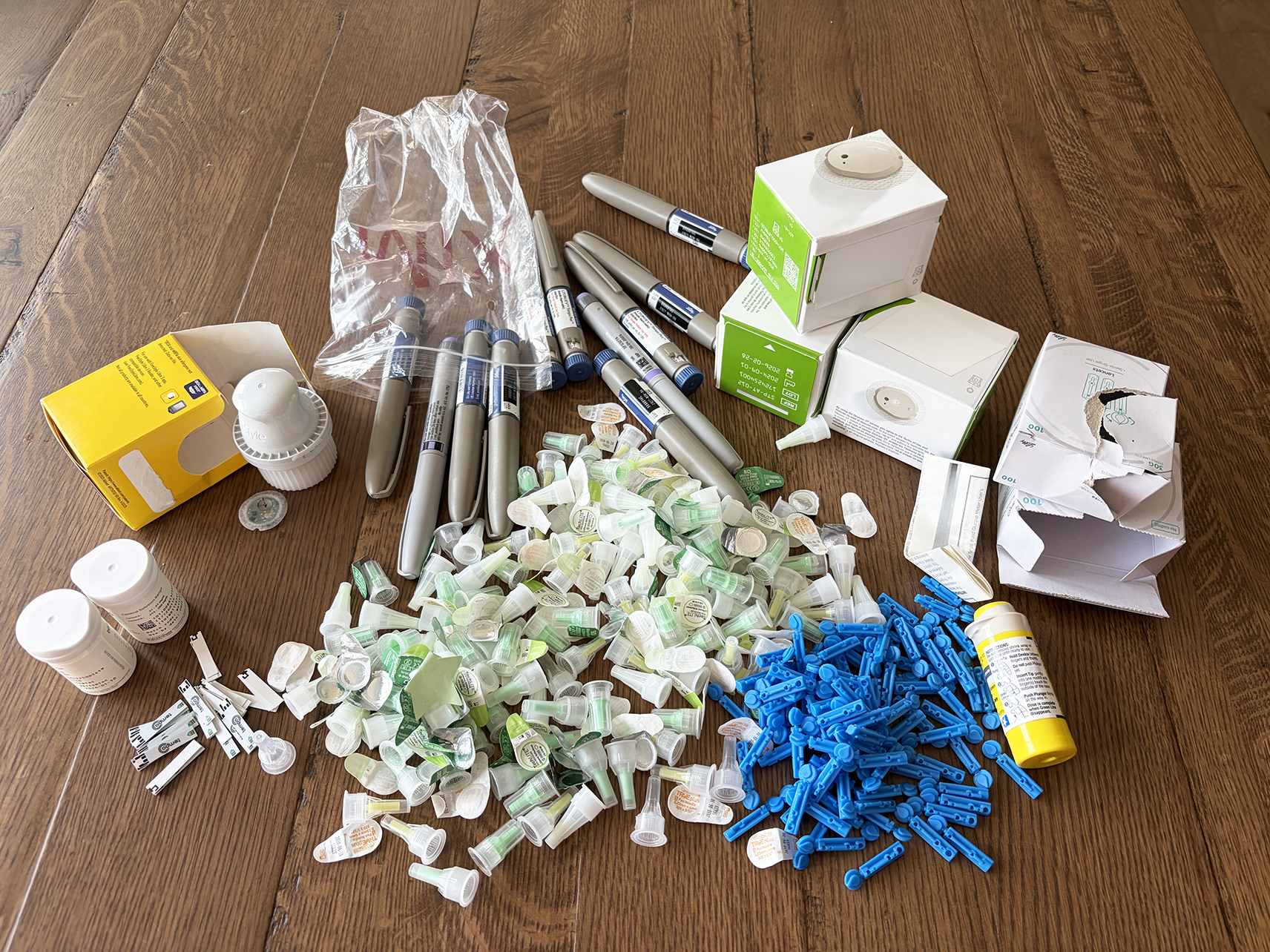
An example of the amount of diabetes-related plastic waste that can be generated in two to three months. Visible here, from left to right, are test strips, CGMs, disposable insulin pens, pen needles, lancets, another type of CGM, and emergency medicine for Chris if her blood sugar goes too low.
“Diabetes plastic waste is a newer field with lots of good commentary pieces, but very few waste quantification studies that capture the scale of this problem,” says Chris.
“Diabetes is complex because it not only varies from person to person, but it also varies within a singular person. The amount of insulin I need this week may be wildly different from the amount I need next week. That constant fluctuation means people with diabetes need flexibility and unhindered access to supplies.”
Chris explains that there are a plethora of devices and products used to manage diabetes – and the lifespans of these products vary drastically. In her opinion, a circular economy to reduce single-use plastic waste can only work if this debate is held at the design and productions stages – with the aim being to extend product longevity and incorporate better disposal and recycling practices.
“I personally use disposable insulin pens, pen needles and a CGM, which is a wearable device that connects to my phone and sends my glucose levels via wireless connectivity. There are also insulin pumps, glucometers and test strips, vials and syringes.
“Most people who use the highest level of tech (insulin pumps and CGMs) also keep insulin pens and a glucometer as back up. The lifespans of these products vary drastically. Insulin pump infusion sets last three days while the pump itself can last five years or so. CGMs last 10 to 15 days depending on the brand. Disposable insulin pens can last two to three weeks, but that number highly depends on the user's rate.
“In my opinion, the best way forward is a multi-pronged approach to design products that balance patient needs and environmental concerns. Manufacturers come into this debate primarily at the design and production stages. These stages are also points where we can apply circular economy strategies – intentional designs that extend product longevity, use biomaterials instead of traditional plastics, and design devices for easier and better disposal or recycling practices.
“Adopting reusable pens is one option that we can do now and would help cut down plastic waste. The issue here is that not every type of insulin is offered in the reusable pen cartridge which limits patient access to single-use pens.
“So, there is complexity at every step, which is why it's important to target the different stages of a product. That again is the intention behind applying the circular economy framework: to ensure that, from the start, devices are designed and produced with reuse, refurbishment or recycling in mind, depending on what is feasible.”
Driving change – stronger together
“When I started working for T1International, I found this beautiful community of incredibly strong people that fight so hard to live every day, to demand the respect of the public eye, and to open access to the medicine and supplies that keep us alive. It was both breathtaking and overwhelming.
“Other people living with diabetes really inspire me. Up until the last two years, I was living my diabetes life in solitude. I didn't know many other type 1's and was always the only one in my small community or friend groups with diabetes. I didn't realise how hard it is to manage this disease because there is no other choice than to be on the clock 24/7.
“My goal once I complete my PhD is to continue to drive change in the diabetes field. I love having an international lens so I would like to continue my work in this sector, but I'm also very open to the opportunities that may arise from my research in engineering design and sustainability.
“No matter what field I end up in, ultimately, I want my research to have pragmatic applications that solve wider issues. That is my guiding principle as I grow in the world of research.”
