
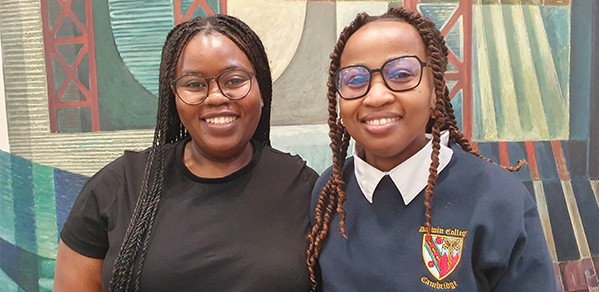
Students from across Africa are studying at the Department of Engineering thanks to the Mastercard Foundation Scholars Programme at the University of Cambridge.
These remarkable and impressive individuals have the opportunity to realise their commitment to contribute to climate resilient and sustainable futures for Africa and the world at large.
Prof Colm Durkan
The scheme is designed to provide students from under-represented communities in Africa with fully-funded opportunities to complete their Masters of Philosophy courses. This programme supports the scholars to grow their leadership potential, as well as contributing to climate resilience and sustainability efforts across Africa.
The class of 2025-2026 is the biggest and most diverse cohort, with 69 scholars across the University representing 18 African nations. Of these scholars, 11 are studying for an MPhil at the Department of Engineering.
Head of Department Professor Colm Durkan said: “Thanks to the Mastercard Foundation scheme, these remarkable and impressive individuals have the opportunity to realise their commitment to contribute to climate resilient and sustainable futures for Africa and the world at large.”
Esther Barakengera is a civil engineer who moved from the Democratic Republic of the Congo to Eswatini as a refugee, more than 20 years ago.
She is studying for a MPhil in Engineering for Sustainable Development and hopes to contribute to driving transformative changes and developing climate-resilient cities, through her studies.
“The programme is helping me develop my thinking by teaching me about systems thinking and how complex problems require a multidisciplinary approach.”
Esther, of Darwin College, said: “The MPhil is giving me the tools, perspectives and confidence to engage with complex sustainability challenges.”
Tadalisika Zulu is a Zambian civil engineer, now studying for an MPhil in Engineering for Sustainable Development. Tadaliska, of Lucy Cavendish College, is researching integrating sustainability assessments into design and construction to promote sustainable urbanisation. Her goal is to develop sustainable and resilient public infrastructure systems in Zambia.
Elijah Nelson is a Nigerian electrical engineer studying for an MPhil in Machine Learning and Machine Intelligence. His research is at the intersection of microchips and AI, particularly in embedded systems engineering and robotics.
He co-founded Tech4Progress, an NGO to equip children with essential digital skills, as he believes, “Digital literacy opens doors”. Elijah, of Fitzwilliam College, said: “I’m not studying machine learning in isolation, but to build scalable systems that learn from systems and human patterns to make dependable decisions and operate reliably in the real world.”
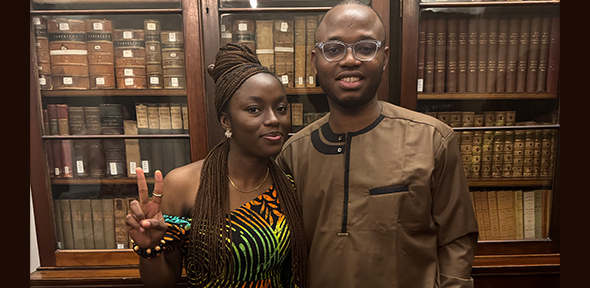
Olubusolami Sogunle and Elijah Nelson/Credit:Gareth Millar
Olubusolami Sogunle is a Nigerian software engineer and community builder. She is studying for an MPhil in Machine Learning and Machine Intelligence, looking at the intersection of AI, language and social impact. A member of St John’s College, Olubusolami’s research will explore how AI and multilingual technologies can support climate resilience.
Samson Oluwatosin Adewoye is a Nigerian mechanical engineer dedicated to advancing safer and cleaner energy systems across Africa. He is currently pursuing an MPhil in Engineering and is a member of Darwin College. His research focuses on the application of hydrogen fuels in aero-engines and gas turbines, with particular emphasis on turbulent combustion and the reduction of harmful emissions through the decarbonization of these energy systems.“I love my course because it equips me with the expertise to deploy hydrogen as a viable decarbonisation fuel," he said.
“My dream is to become a managing director of a globally influential international energy company.”
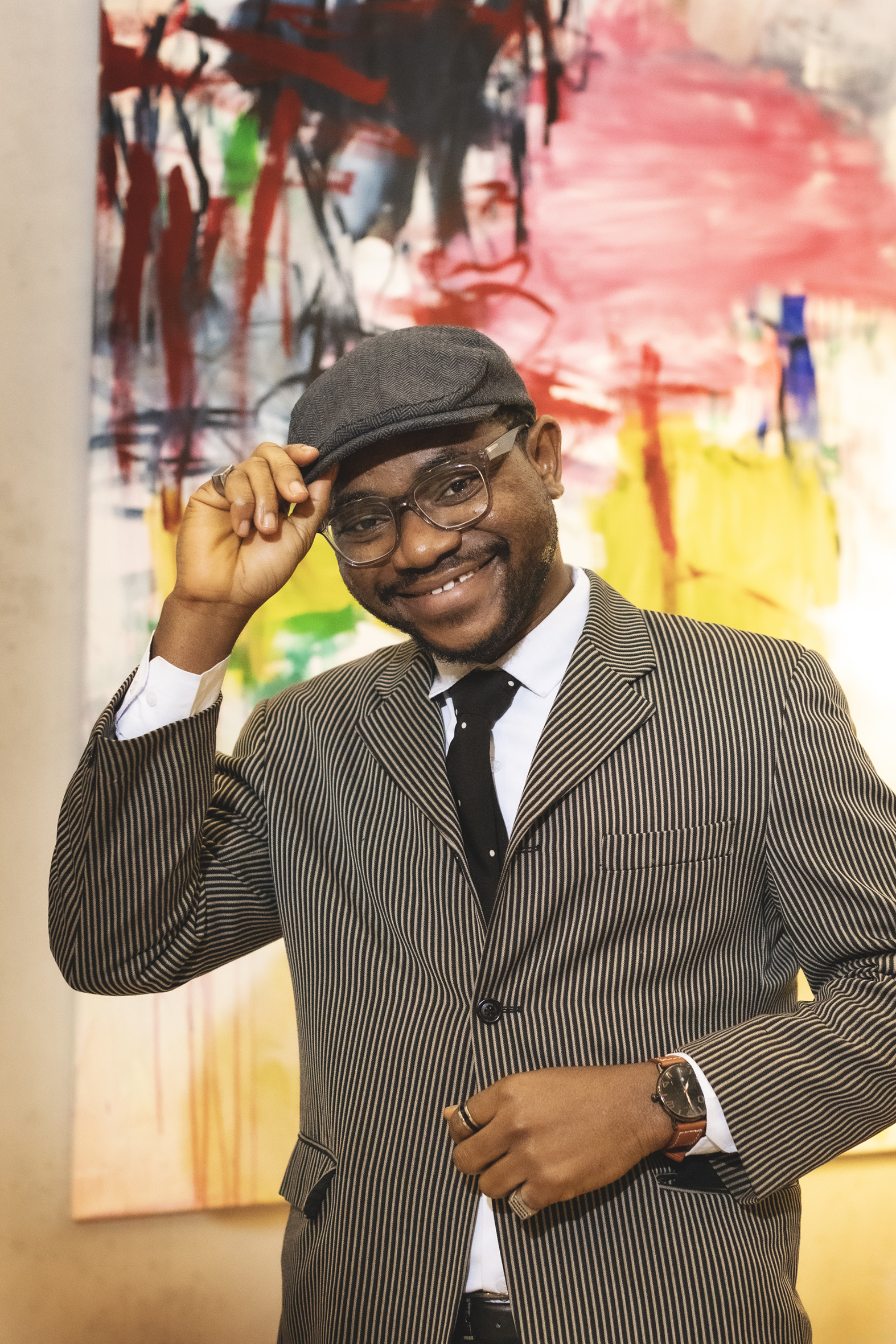
Samson Oluwatosin Adewoye/Credit:Gareth Millar
The other Mastercard Foundation Scholars in the Department of Engineering this year are:
Josephine Adah, from Nigeria, has a background in civil engineering and is studying for an MPhil in Energy Technologies. The Girton College student aims to leverage her expertise in engineering, AI, and strategic management to shape a just and sustainable energy landscape for emerging markets.
Beimnet Bekele Guta is an Ethiopian engineer studying for an MPhil in Machine Learning. He is focused on building resource-efficient AI systems for underrepresented languages and emerging markets and has already contributed to AI projects on coffee disease and cancer detection at the Ethiopian Artificial Intelligence Institute. Beimnet, of Hughes Hall, aims to help upskill African professionals in AI and machine learning.
Munotidaishe Andrew Matsvairo is an industrial engineer from Zimbabwe and studying for an MPhil in Industrial Systems, Manufacture and Management. The Magdalene College student hopes to become an industry leader in contributing to the future of sustainable manufacturing systems in Africa and across the globe.
Caroline Moserega Mwita is a civil engineer from Kenya and a member of Wolfson College, studying for an MPhil in Engineering for Sustainable Development. Her research will look at the integration of climate adaptation into road design and policy.
Joan Sseggane Nantaba is a Ugandan environmental engineer, studying for an MPhil in Engineering for Sustainable Development. Joan, of Magdalene College, aims to foster collaborations with local and global organisations to tackle environmental challenges and achieve net zero carbon emissions by 2050.
Enita Ese Okonkwo is a Nigerian civil engineer studying for an MPhil in Engineering for Sustainable Development. A member of Churchill College, Enita’s research explores integrating indigenous construction knowledge and smart construction technologies to modernise urban infrastructure development
